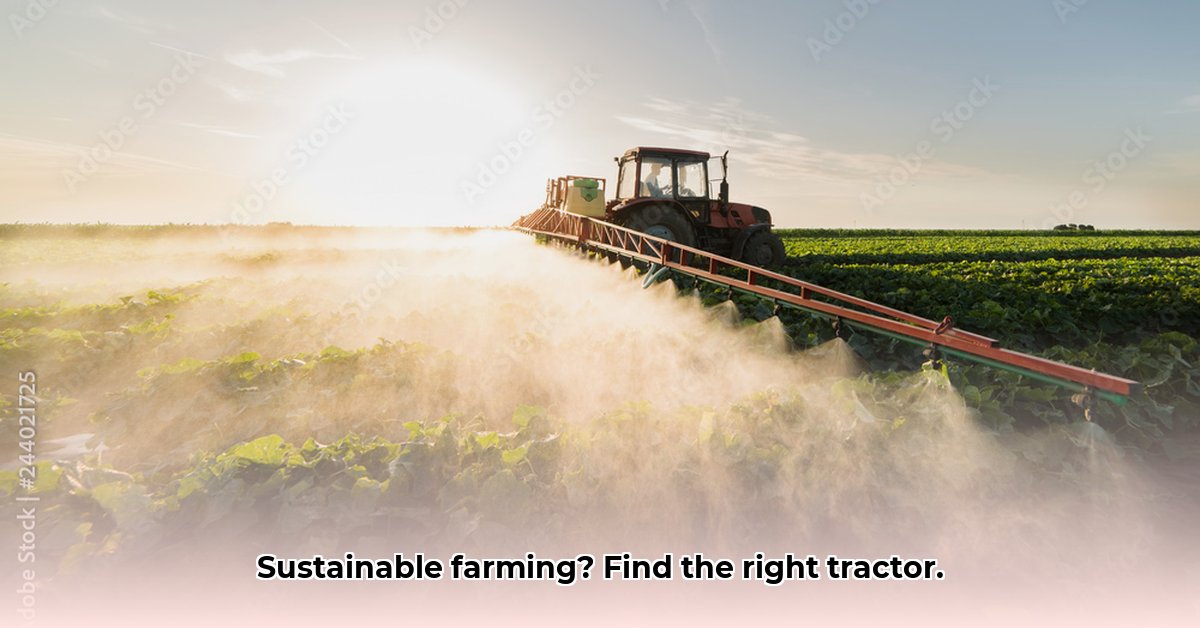
Choosing the right fertilizer tractor is a crucial decision for any farmer, impacting both profitability and environmental stewardship. This guide provides a step-by-step approach to selecting a tractor that optimizes your operation while minimizing your environmental footprint. For more detailed cost analysis, check out this helpful resource on tractor costs.
Understanding Your Farming Needs: A Personalized Approach
Before researching specific tractors, assess your farm's unique characteristics. This personalized approach ensures you select a machine perfectly suited to your needs.
Farm Size and Layout: Large farms with extensive, varied terrain require powerful, heavy-duty tractors. Smaller farms with manageable fields may benefit from more compact, fuel-efficient models. Consider field accessibility and potential obstacles.
Crop Type and Fertilizer Requirements: Different crops have unique fertilization needs. Row crops, orchards, and vineyards each demand specific application methods. Determine the type of fertilizer you use (granular, liquid, or both) to select a compatible tractor.
Budgetary Considerations: Fertilizer tractors represent a significant investment. Factor in the initial purchase price, ongoing maintenance, fuel costs, and potential repairs when budgeting. Explore financing options to spread the cost effectively.
Environmental Goals: Prioritize fuel efficiency, reduced emissions, and minimized soil compaction to achieve your environmental objectives. Sustainable practices are key to long-term farm health and profitability.
Tractor Types: A Comparative Analysis
Two primary tractor types cater to the needs of environmentally conscious farmers:
1. Heavy-Duty Tractors: These powerful machines excel in large-scale operations and challenging terrains. Their high capacity ensures efficient fertilizer application on vast fields. However, they typically command a higher price, consume more fuel, and have a greater risk of soil compaction.
2. Compact or Articulated Tractors: Suitable for smaller farms and fields with obstacles, these nimble tractors boast superior fuel efficiency and lower initial costs. However, their carrying capacity is limited, making them unsuitable for large-scale fertilizer applications.
Maximizing Fertilizer Application: Strategies for Efficiency
Efficient fertilizer application is paramount for both sustainability and profit. Employ these strategies to optimize your operation:
Precision Farming Techniques: GPS-guided spreaders offer unparalleled accuracy, minimizing fertilizer waste and ensuring even distribution. This technology is key to efficient nutrient delivery.
Variable Rate Technology (VRT): Adjust fertilizer application rates based on real-time soil conditions and crop needs. VRT significantly reduces over-application, conserving resources and minimizing the environmental impact.
Precise Calibration: Regular calibration of your fertilizer spreader is essential to maintain consistent distribution. Inconsistent spreading leads to wasted fertilizer and uneven crop growth, impacting yield and profitability.
Data-Driven Decisions: Soil Testing: Regularly conduct soil tests to accurately assess nutrient deficiencies. This data-driven approach guides targeted fertilizer applications, maximizing efficiency and resource use. Don't underestimate the importance of understanding your soil's specific needs.
Making the Sustainable Choice: A Long-Term Investment
Choosing a fertilizer tractor is a long-term investment. Thoroughly evaluate your farm's needs, budget, and sustainability goals. Research and compare different models from reputable manufacturers. Consider consulting with agricultural experts for personalized advice. Your choice significantly impacts both farm efficiency and environmental responsibility. Remember, sustainable practices are an evolving process demanding continuous improvement and adaptation.
How to Choose a Sustainable Fertilizer Spreader Tractor for Small Farms
Selecting a fertilizer spreader tractor for a small farm necessitates a careful consideration of specific needs and limitations. Cost-effectiveness and minimal environmental impact are paramount.
Assessing Your Needs: Prioritizing Efficiency
Before purchasing, accurately assess acreage, terrain complexity, and the type of fertilizer you use. Consider the challenges posed by slopes, obstacles, or soil conditions.
For small farms, fuel efficiency often outweighs raw power. Understand your farm's unique demands to make an informed choice. Choosing a used tractor can significantly reduce upfront costs without compromising functionality.
Balancing Tractor Power with Fuel Efficiency
Selecting appropriate horsepower is crucial. Insufficient power leads to inefficient spreading and incomplete coverage. Excessive power increases fuel consumption and soil compaction. Striving for balance is key to long-term sustainability on a small farm.
Transmission Type: Operator Preference and Farm Complexity
Operator preference plays a role in the decision between manual and automatic transmissions. While manual transmissions may offer slight fuel economy advantages, automatic transmissions lessen operator fatigue during extended work.
Tire Selection: Minimizing Soil Compaction
Soil compaction is a major concern for small farms seeking sustainability. Wide, low-pressure tires minimize compaction. Consider track systems instead of tires for superior weight distribution, particularly on wet or delicate soils. The initial cost is offset by long-term benefits to soil health.
Precision Agriculture: A Sustainable Investment
Consider GPS guidance and variable rate application (VRA) technologies. These tools are essential for maximizing fertilizer efficiency and minimizing waste, aligning with sustainable practices.
A Sustainable Tractor Strategy: A Step-by-Step Approach
- Comprehensive Farm Assessment: Evaluate acreage, terrain, and fertilizer requirements.
- Power Needs Determination: Balance the need for power with fuel efficiency to avoid unnecessary expenses.
- Transmission Choice: Select manual or automatic based on operator comfort and workload.
- Tire/Track Selection: Opt for options minimizing soil compaction for long-term soil health.
- Precision Agriculture Integration: Incorporate GPS and VRA technologies for optimal fertilizer usage and environmental sustainability.
- Budgeting and Financing: Explore financing options or consider purchasing a used tractor to reduce immediate financial burden.
This guide provides general best practices. Consult agricultural professionals for personalized advice tailored to your specific farm conditions. Remember to always cite your sources.